
I have a gym buddy who is always “kidding” around during our workouts. He’ll often stop me in a mid-barbell raise and tell me a silly joke or deliver an amusing anecdote. Today’s ditty went like this… Why did the golfer bring two pairs of socks? In case he got a hole in one. We would both give a slight chuckle and move on. Often, when we are told a joke, such as, “What did the dog say when he sat on steel wool?” we don’t give them much thought and respond with the usual, “Hmmm, I don’t know… why? Of course that is then followed quickly with the punchline, in this case, “ruff”.
Is it that we can’t wait for that punchline, so we rush the person to reveal it, or is it that our brains are just too preoccupied to bother and just want to get on with what we’re doing? Most people won’t go through a list of possible answers to prolong getting to that one correct answer. Our brains are wired to just get the necessary information to solve a quandary, store it, and then move on to the next challenge.
But what happens if you are asked a question, and in your haste to answer, you deliberately give a wrong answer, even though you know the correct one? Here’s where the Moses Illusion comes in. In layman’s terms, the Moses Illusion is a cognitive phenomenon where people fail to recognize an inaccuracy in a sentence, even when they possess the correct knowledge to identify it.

The classic example of this illusion, which inspired its name, occurs when people are asked:
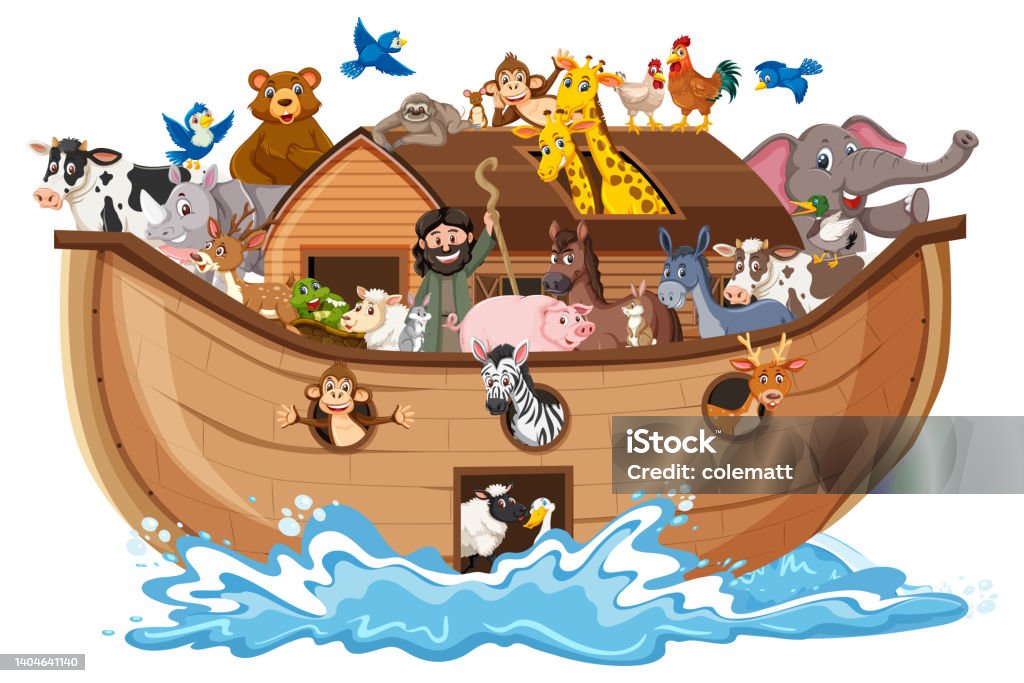
“How many animals of each kind did Moses take on the Ark?” Most people will automatically answer “two”, failing to notice that the question should refer to Noah, not Moses. This happens despite that person knowing for a fact that Noah was the one who built the ark. Now, you might ask, why does this happen? Well, here are a few reasons why. First of all, our brains do not process every single word in a sentence. As we grow and age, we tend to “match” certain terms together in our minds to get to that answer as quickly as we can. Sure, we’re thinking about the answer, but our brains take a shortcut to the answer and therefore present the most logical conclusion to that question. In the case of Moses and Noah, most of us know they are both biblical persons. Most of us have probably seen images of the two of them and know that they are both older looking, and both had beards. Our brains are “wired” to partially match them and since the name Moses came first in the original question, the other traits then fell into place and we said “Moses” instead of “Noah”. The illusion in our mind is much stronger when we know that the incorrect name is somehow related to the correct one. If we were asked the question, “How many animals did Isaac Newton take on the Ark”, our brains would then put up a stop sign and say, “Wait a minute…”, that can’t be true at all and then we would probably give the correct answer… Noah.
Some other examples of the Moses Illusion might be a little less confusing. If you were asked the question, ” What passenger liner was tragically sunk by an iceberg in the Pacific Ocean?” one might simply go right past the obviously wrong body of water and come up with the correct answer, “The Titanic”, knowing it sank in the Atlantic Ocean instead. So, in this case our brain picks up on the distorted fact (the ocean), and then proceeds to ignore that and so straight to the heart of the question… the name of the ship.
Another classic example is this one: “Can a man marry his widow’s sister?” Many people will immediately say yes, missing that for her to be a widow, the man must be dead. But, think of this… no, it is not possible for a man to marry his widow’s sister because by definition, a widow is a woman whose spouse has died. If a man is deceased, then he cannot marry anyone, including his widow’s sister. That’s a brain-twister for sure!

Generally speaking, the older you get, the more “confused” your brain will get in trying to answer even some very basic questions. As we age, our brains are not as quick to gather up the necessary bits and pieces of information to adequately give a solid cognitive answer to some questions. This gives the Moses Illusion a more scientific basis.
Let’s try a little experiment. Go grab yourself a piece of paper and a pen or pencil. I’ll wait! I’m going to list a number of questions to you. You have just 3 seconds to answer each one. Write down your answers to each of the 10 questions. No, you can’t ask Google, ChatGPT or Gemini, that’s cheating. I will then list the answers and see how you did. Here we go:
What country was Margaret Thatcher president of?
What kind of tree did Lincoln chop down?
By flying a kite, what did Edison discover?
What did Goldilocks eat at the three little pigs house?
Who found the glass slipper left at the king’s ball by Snow White?
What is the name of the Mexican dip using smashed up artichokes?
What is the name of the shape whose circumference is calculated by pi-r-squared?
What country is famous for cuckoo clocks, chocolate, stock markets and pocketknives?
In the biblical story, what was Joshua swallowed by?
In what century did Milton Hershey invent the bicycle?
O.K. Pencils down!
Let’s see how well you did. The answers to the questions are:
- Margaret Thatcher was the prime minister not the president of England.
- George Washington chopped down the cherry tree, not Lincoln.
- Benjamin Franklin discovered Electricity, not Thomas Edison.
- Goldilocks ate porridge at the 3 bears house, not the little pigs house.
- The prince found the glass slipper left by Cinderella, not Snow White.
- Guacamole is made with avocados not Artichokes.
- A circle is the name of the shape whose area is calculated by pi-r-squared, not the circumference.
- Switzerland has chocolate, clocks and banks, not stock exchanges.
- Jonah was swallowed by a whale, not Joshua.
- Milton Hershey invented the Hershey Bar, not the bicycle
How did you do? I’m sure most of you were stuck on the pi-r-squared one. I wasn’t good at math either. So, in conclusion, if we take just a bit longer to think about questions, even while reading, our brains will improve on providing all of the correct answers, because in most cases we know this stuff. It just takes some of us a bit longer to get to the answers. So, the motto here is to just slow down. Take a few more seconds to think things through and then answer. You’ll be surprised how much more knowledge you have stored in that brain of yours, if you just give it a little more time to find it. There is no illusion once you have found the answer.
I hope you enjoyed this “different” type of blog. Let me know in the comments. I always like learning something new and I hope you do also.
Thanks for stopping by.
Caio!
Lenny
Discover more from Lenny Ricci, Author
Subscribe to get the latest posts sent to your email.

Hi Len, What a different blog! Not too sure I liked it until the 10 questions at the end. I took the quiz, trying to actually answer the questions in just a few seconds as requested. Sad to say I only correctly answered 3 but in my defense, sort of, there were another 2 that I never would have answered correctly since I didn’t know the answer even if I had all the time in the world. You’re right in stating that slowing down and thinking about our answers for a bit I would have gotten 8 out of the 10 right. Interesting! My brain just needed time to spot the wrong information given. I guess I suffer from the Moses Illusion as I frequently talk before thinking through something. My poor aging brain needs some help at times! Thanks for the food for thought.
Betty
LikeLike
I loved the challenge of the quiz. I did not know the one about the circle. But I did pretty good on all the rest. You’re right though if u take your time you tend to get it right. Good message to slow down.
LikeLike